
Key Takeaways
- Making new (primary) aluminium is carbon-heavy: about 14.8 tonnes of CO₂e per tonne globally, and roughly 19–20 tonnes in India, where smelters run almost entirely on coal.
- Recycled aluminium needs about 5% of the energy of primary aluminium, and around 75% of all aluminium ever produced is still in use. That's aluminium's strongest environmental argument.
- Over a full life cycle, service life matters more than the frame material. A peer-reviewed study found a moderately maintained aluminium window frame had 68% lower global warming potential than uPVC over an 80-year building life.
- A window frame's footprint is small next to what the glass does to your cooling bill. Glazing choice (solar heat gain, double glazing) usually affects lifetime emissions more than frame material.
- "Eco-friendly" claims are only as good as the paperwork behind them. Ask about recycled content, an Environmental Product Declaration (EPD), and a long, component-by-component warranty.
Are aluminium windows eco-friendly? The honest answer is: it depends on where the metal came from and how long the window lasts. Aluminium is easy to sell as the sustainable choice because it can be recycled endlessly without losing quality. It's just as easy to attack, because making new aluminium from bauxite is one of the most carbon-intensive processes in the building-materials world. Both of those statements are true at once.
India makes the gap wider than in most places. Nearly all of India's primary aluminium smelting runs on captive coal power, so a tonne of new Indian aluminium carries a noticeably heavier carbon load than the global average. On the other hand, a well-made aluminium window can stay in service for decades and then be melted down and turned back into another window using a small fraction of the original energy.
This guide walks through both sides with real numbers. It covers what the carbon cost of aluminium actually is, how recycling changes the maths, how aluminium compares with uPVC and wood over a full life cycle, and what questions to ask a supplier if sustainability matters to your project.
The Uncomfortable Part: Making New Aluminium Is Carbon-Heavy
Primary aluminium is made by refining bauxite into alumina, then splitting it into metal through electrolysis, a process that runs on enormous amounts of electricity. According to the International Aluminium Institute, the 2023 global average cradle-to-gate footprint of primary aluminium was about 14.8 tonnes of CO₂e per tonne of metal, and the single biggest share of that comes from the electricity used in electrolysis.
The source of that electricity changes everything. The IAI's own indicative ranges put hydro-powered smelting at roughly 10 tonnes of CO₂e per tonne of aluminium, gas at about 13, and coal at about 30 when you look at electricity-related emissions. That's why "aluminium" isn't one carbon number. It's a range that depends almost entirely on the power grid behind the smelter.
India sits on the heavier end. A 2026 policy paper from the LSE's Grantham Research Institute estimates Indian primary aluminium at around 19.6 tonnes of CO₂e per tonne, well above the global average, because about 96% of the power used by Indian smelters comes from captive coal plants. If your window profiles are made from new Indian aluminium with no recycled content, that's the carbon starting point.
None of this is a reason to avoid aluminium outright. It is a reason to be sceptical of any brochure that calls aluminium "eco-friendly" without saying anything about where the metal came from.
The Strong Part: Aluminium Recycles Almost Endlessly
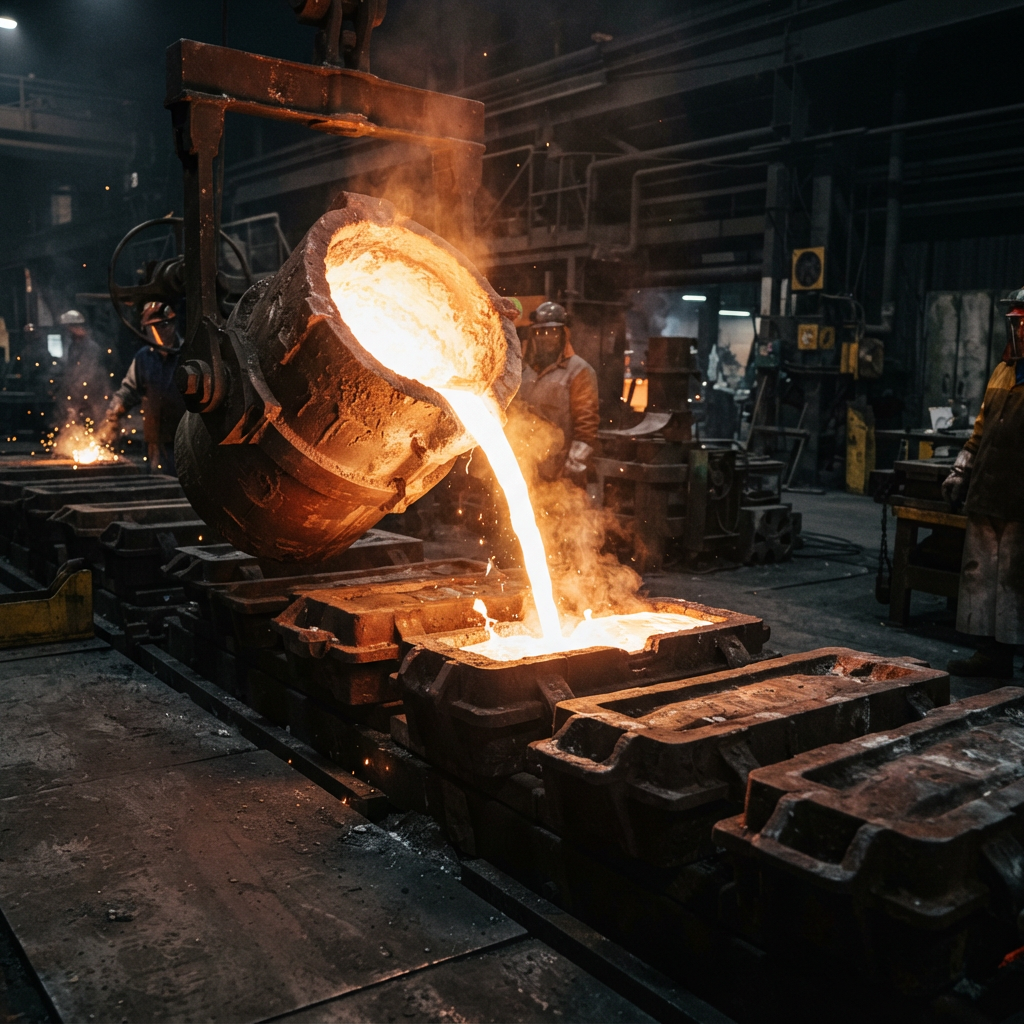
Aluminium's environmental case rests on what happens after that first smelt. Once the metal exists, it can be remelted and reused again and again without losing its structural properties, which isn't true of most plastics.
- Energy: The IAI calculates that recycled aluminium needs about 8.3 GJ per tonne of primary energy, compared with 186 GJ per tonne for primary aluminium. That's a saving of roughly 95%.
- Still in use: Of the more than 1.6 billion tonnes of primary aluminium produced since 1888, the IAI estimates about 75% is still in use today, in buildings, vehicles, cables and products that will eventually be recycled again.
- Construction scrap: Aluminium from buildings is large, easy to identify, and valuable, so it tends to be collected rather than landfilled. Industry bodies commonly cite recovery rates above 90% for construction and automotive aluminium, though local practice varies.
India's recycling base is still developing. The same LSE paper puts secondary (recycled) aluminium at about 27% of India's aluminium supply, so there's real room for that share to grow.
The practical point for a homeowner: an aluminium window frame is not "used up" when it's removed. Its metal has real scrap value and a clear route back into new products. That's much harder to say for a uPVC frame or a painted, glued timber one.
How Aluminium Compares With uPVC and Wood
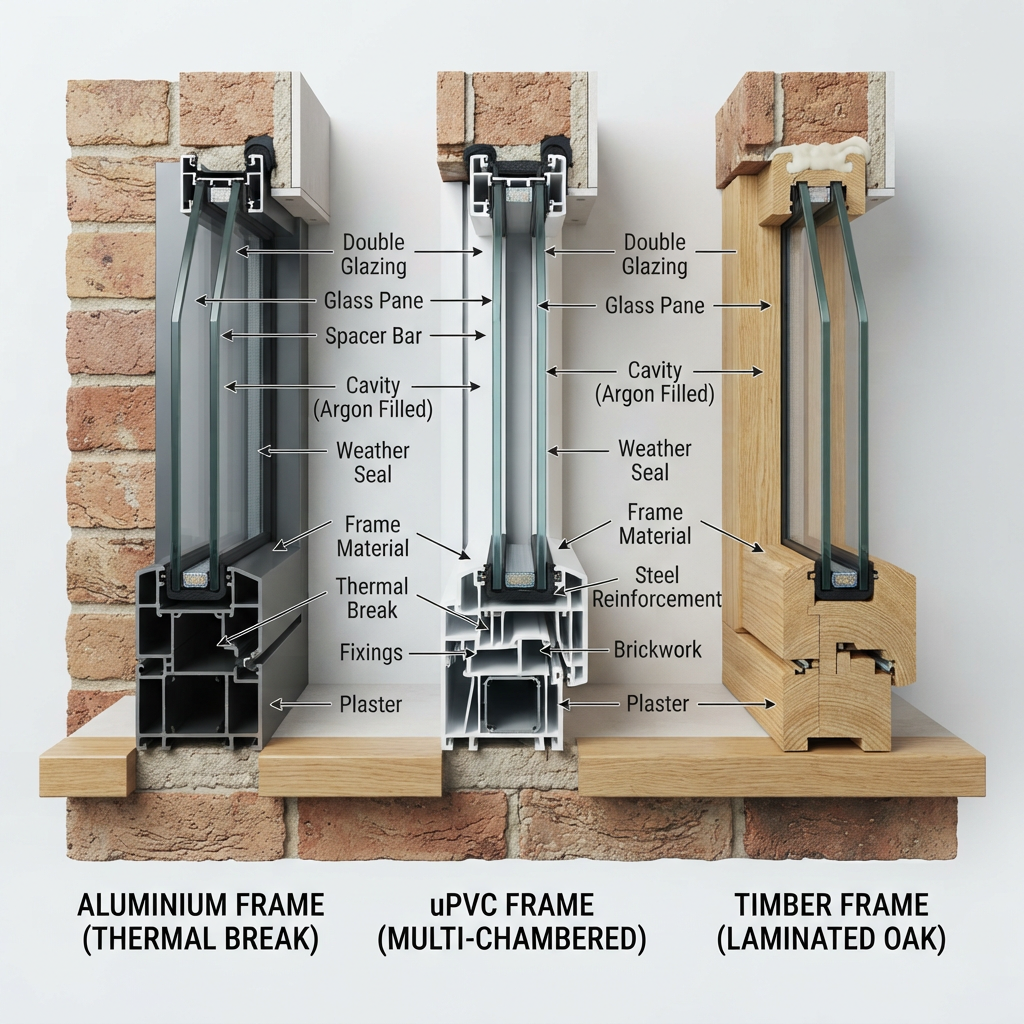
Comparing window materials on the carbon cost of the raw material alone is misleading. A fair comparison looks at the whole life: production, maintenance, how long the window lasts before replacement, and what happens at end of life. For a full lifespan and cost breakdown, see our aluminium vs uPVC vs wood windows guide.
That's what a peer-reviewed study in the International Journal of Life Cycle Assessment (Carlisle & Friedlander, 2016) did. It compared aluminium, wood, aluminium-clad wood, and uPVC frames over an 80-year building life. Its findings:
- Well-maintained aluminium frames were the lowest-impact option across every category measured, mainly because of recycling credits and long service life.
- The global warming potential of a moderately maintained aluminium frame was 68% lower than uPVC and 50% lower than aluminium-clad wood.
- Wood had the least variability. Its impact stayed relatively steady across maintenance scenarios, and in a long-life scenario wood beat aluminium-clad wood by about 7%.
- The single most important factor was expected service life, not the frame material itself.
That last finding is the one to remember. A window that has to be replaced twice in 80 years carries three times its production footprint. A window that lasts the life of the building carries it once. That is why proper maintenance directly shapes a window's footprint.
| Factor | Aluminium | uPVC | Wood |
|---|---|---|---|
| Carbon to produce the raw material | High (very high if primary, coal-powered) | Moderate; made from fossil-fuel feedstock plus chlorine | Low if sustainably sourced; timber stores carbon |
| Typical service life | Long (decades) if well specified and maintained | Medium; plastics degrade under strong UV and heat | Varies widely; long with regular care, short without |
| Maintenance burden over life | Low | Low | High (sanding, sealing, repainting, termite risk) |
| End-of-life recyclability | Excellent; valuable scrap, recycled without quality loss | Technically recyclable, but collection and recycling rates are low in practice | Can be reused or burned for energy; treated or painted wood is harder to process |
| Life-cycle verdict (per Carlisle & Friedlander) | Lowest impact when well maintained | Highest GWP of the four frames studied | Most consistent; strong in long-life scenarios |
Wood deserves fair credit here. Responsibly sourced timber has the lowest raw-material footprint of the three and stores carbon for as long as it stays in the wall. Its weakness in Indian conditions is the maintenance and replacement cycle that termites, monsoon humidity, and heat impose. uPVC's weak point is the opposite: it's cheap to produce and low-maintenance, but it rarely gets recycled at the end of its life.
The Bigger Factor: What the Window Does to Your Energy Bill
For most Indian homes, the frame's production footprint is a one-time cost. The electricity used to cool the house is a cost that repeats every year for decades, and windows have a big influence on it. Two things matter most:
- The glass. Glass makes up most of a window's area, so it lets in most of the heat. Solar heat gain coefficient (SHGC) is the key number. Published guides to Indian green-building ratings cite thresholds of around SHGC 0.45 or lower for IGBC Green Homes and 0.25 or lower under GRIHA. Double glazing and solar-control or low-E coatings can cut cooling load substantially.
- The frame's heat transfer. Aluminium conducts heat well, which is a real weakness. Thermally broken profiles (with an insulating barrier between the inner and outer aluminium) reduce this. As we covered in our thermal-break guide, in hot climates this matters most for air-conditioned rooms and west-facing facades.
In short: a well-chosen glass specification on a decent aluminium frame will usually do more for your home's lifetime carbon footprint than switching frame materials ever would.
What Makes One Aluminium Window "Greener" Than Another
If two aluminium windows look identical, these are the details that separate the more sustainable one:
| What to check | Why it matters | What a good answer looks like |
|---|---|---|
| Recycled content | Recycled aluminium needs about 5% of the energy of primary metal | A stated percentage, ideally backed by mill or extruder documentation |
| Source of primary metal | Coal-powered smelting roughly doubles the electricity-related footprint compared with hydro | Named source or low-carbon aluminium certification, where available |
| Environmental Product Declaration (EPD) | The standard, third-party-verified way to state a product's life-cycle impact | A published EPD to EN 15804 or ISO 14025, or an honest "we don't have one yet" |
| Alloy and wall thickness | Stronger, properly specified profiles last longer, which is the biggest life-cycle lever | A named alloy grade (such as 6063 T5/T6) and stated wall thickness |
| Finish durability | A finish that fails early leads to refinishing or early replacement | Finish type and grade specified, with its own warranty term |
| Thermal performance | Lower heat transfer means lower cooling energy every year | Thermal-break option for air-conditioned spaces, plus a clear glass specification |
| Warranty length | A long warranty is the manufacturer's bet on long service life | Separate, long terms for profile, finish, and hardware |
Common Myths, Corrected
"Aluminium is eco-friendly because it's recyclable."
Partly true. Recyclability only helps if the metal is actually recycled at end of life, and it does nothing to offset the footprint of primary metal that went into your window in the first place.
"uPVC is greener because it uses less energy to make."
Only on a production-only view. Once service life, replacement and end-of-life recycling are counted, the life-cycle study above found uPVC frames had the highest global warming potential of the materials compared.
"Wood is always the sustainable choice."
Only if it's responsibly sourced and properly maintained. Untreated or poorly maintained timber in Indian conditions can need replacing far sooner, which erodes its advantage.
"The frame material is what makes a window green."
Usually not. Glass selection and air-tightness affect your lifetime energy use far more than the frame does.
Frequently Asked Questions
Are aluminium windows eco-friendly?
They can be, but not automatically. Aluminium is carbon-intensive to produce from raw ore, especially in coal-powered India, but it recycles with about 95% less energy and lasts for decades. A long-lasting aluminium window with recycled content, good glass and a thermal break is one of the more sustainable choices available. A short-lived one made from new metal is not.
Is aluminium better for the environment than uPVC?
Over a full life cycle, usually yes. A peer-reviewed study comparing window frames over 80 years found a moderately maintained aluminium frame had 68% lower global warming potential than uPVC, mainly because aluminium lasts longer and is far more likely to be recycled at end of life.
How much energy does recycling aluminium save?
About 95%. The International Aluminium Institute puts the primary energy needed for recycled aluminium at around 8.3 GJ per tonne, compared with about 186 GJ per tonne for new aluminium.
Why is Indian aluminium more carbon-intensive?
Because almost all of India's primary aluminium smelting runs on captive coal power. Recent estimates put Indian primary aluminium at around 19-20 tonnes of CO₂e per tonne, compared with a global average of about 14.8.
Do aluminium windows help with IGBC or GRIHA green building ratings?
Windows contribute mainly through glazing performance (solar heat gain, daylight and ventilation), not through the frame material alone. Recycled content and documented environmental data can also help, so ask your supplier what documentation they can provide for your project.
Can old aluminium windows be recycled in India?
Yes. Aluminium frames have real scrap value and are routinely collected by scrap dealers and recyclers. Removing glass, gaskets and hardware first makes the aluminium easier to recycle cleanly.
Built to Stay on the Wall for as Long as the Building
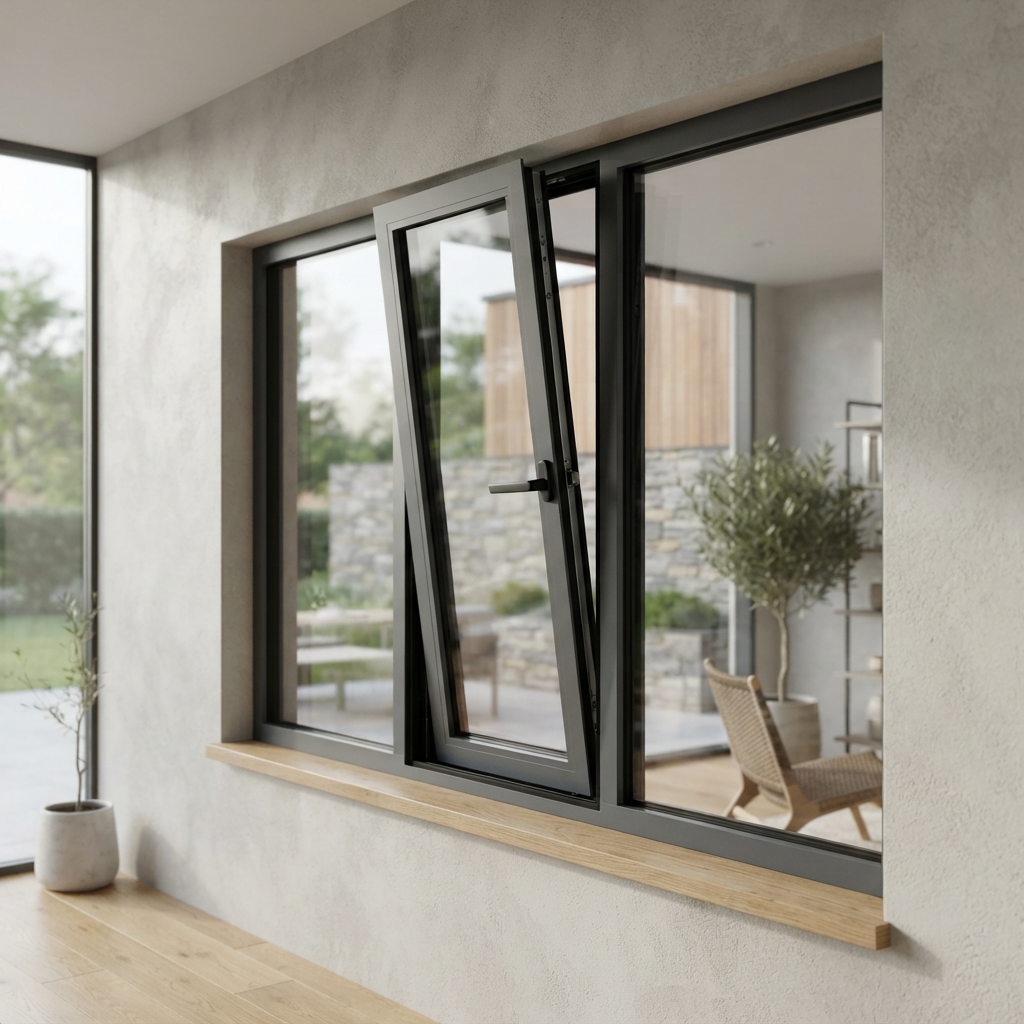
Whichever brand you're considering, the sustainability questions worth asking are the ones in the table above: how much recycled content is in the profile, whether there's an EPD, what alloy grade and wall thickness are used, how the finish is specified, and whether the warranty backs a long service life component by component. A supplier that can't answer these clearly is asking you to take "eco-friendly" on trust.
At SCHON, the lever we focus on most is the one the life-cycle research says matters most: a window that stays on the wall for as long as the building does. Our profiles are designed and extruded in Germany from 6063 T5/T6-grade alloy, sealed with EPDM gaskets, fitted with stainless-steel hardware, and backed by a 25-year profile warranty, a 20-year colour finish warranty, and a 5-year hardware warranty (see how warranty structure affects price). For air-conditioned spaces, the Infinity 135 casement is available with a thermal break. If recycled content or environmental documentation is a requirement for your project, ask us directly and we'll tell you exactly what we can provide.
View SCH-135 Infinity 135Disclaimer: This article is for general informational purposes. Carbon, energy and recycling figures are indicative, drawn from published industry and research sources available as of 2026, and actual values vary by producer, region and product. Green-building thresholds change between rating versions. Always confirm specifications, environmental documentation and certification requirements with your supplier and rating consultant.
