
Key Takeaways
- Aluminium itself doesn't rust, rot, or warp — that part of the "maintenance-free" claim is accurate. The surface finish, hardware, and rubber gaskets around it are the parts that actually age and need attention.
- A basic clean (soft cloth, mild detergent, no abrasives) every 3-4 months is enough for most inland homes; coastal and heavily polluted urban locations need monthly cleaning to stay ahead of salt and grime buildup.
- Hardware — hinges, locks, rollers — needs lubrication roughly twice a year with a silicone-based (not oil-based) lubricant; oil attracts dust and grit that eventually does more harm than good.
- EPDM gaskets and weatherstripping typically last 15-20+ years under normal conditions but should be visually checked annually for cracking, hardening, or gaps — a compromised gasket is the single biggest cause of the leaks and condensation people blame on "bad windows."
- Neglecting drainage (weep holes and sill channels) is the most common real maintenance failure — blocked drainage turns a well-designed window into a puddle collector, which is a design problem nobody notices until it's a water-staining problem.
If you've been told an aluminium window never needs attention once it's installed, the claim is close enough to true that it's easy to believe and specific enough to be wrong in ways that matter. Aluminium window maintenance is real, but it's short: a periodic wipe-down, an annual look at the hardware and gaskets, and keeping the drainage path clear. Skip all of it for a decade and nothing catastrophic happens overnight — but the finish dulls faster than it should, hinges start to stick, and a gasket that should have been replaced for a few hundred rupees turns into a seal failure that costs a lot more to fix.
The confusion usually comes from comparing aluminium to wood, where the "maintenance-free" claim is genuinely earned — the aluminium itself won't rot, warp, rust, or attract termites, which is more than can be said for timber. What the claim glosses over is that a window is an assembly, not a single material: the frame, the surface finish, the hardware, and the gaskets around the glass all age differently, and only one of those four is actually maintenance-free.
This guide breaks down exactly what needs upkeep on an aluminium window, how often, what happens if you skip it, and how that compares to what uPVC and wood actually demand — so "low maintenance" stops being a marketing line and becomes a schedule you can follow.
The "Maintenance-Free" Claim: What's Actually True
Solid aluminium doesn't rust the way steel does. Left exposed to air, it forms a thin, stable oxide layer on its own surface that protects the metal underneath from further corrosion — which is the real, physical reason aluminium windows have a reputation for durability that uPVC and wood can't match on structure alone. A bare, unfinished aluminium extrusion really can sit outdoors for decades without structurally failing.
But almost no aluminium window is sold or installed bare. It's powder-coated, anodized, or PVDF-coated for colour and additional surface protection; it's fitted with steel or stainless-steel hardware for locking and operation; and it's sealed against the glass and against the frame with rubber gaskets, almost always EPDM. Those three additions — finish, hardware, gaskets — are where "maintenance-free" stops being literally true. None of them fail quickly or dramatically under normal conditions, which is exactly why the finish gets marketed as if it doesn't exist at all. It does, and it has its own (much shorter, much cheaper) care requirements than wood ever did.
The honest framing, and the one worth holding any supplier's marketing to, is low maintenance, not no maintenance — a few short, infrequent tasks instead of wood's recurring sanding, sealing, and repainting cycle.
Cleaning: How Often, and With What
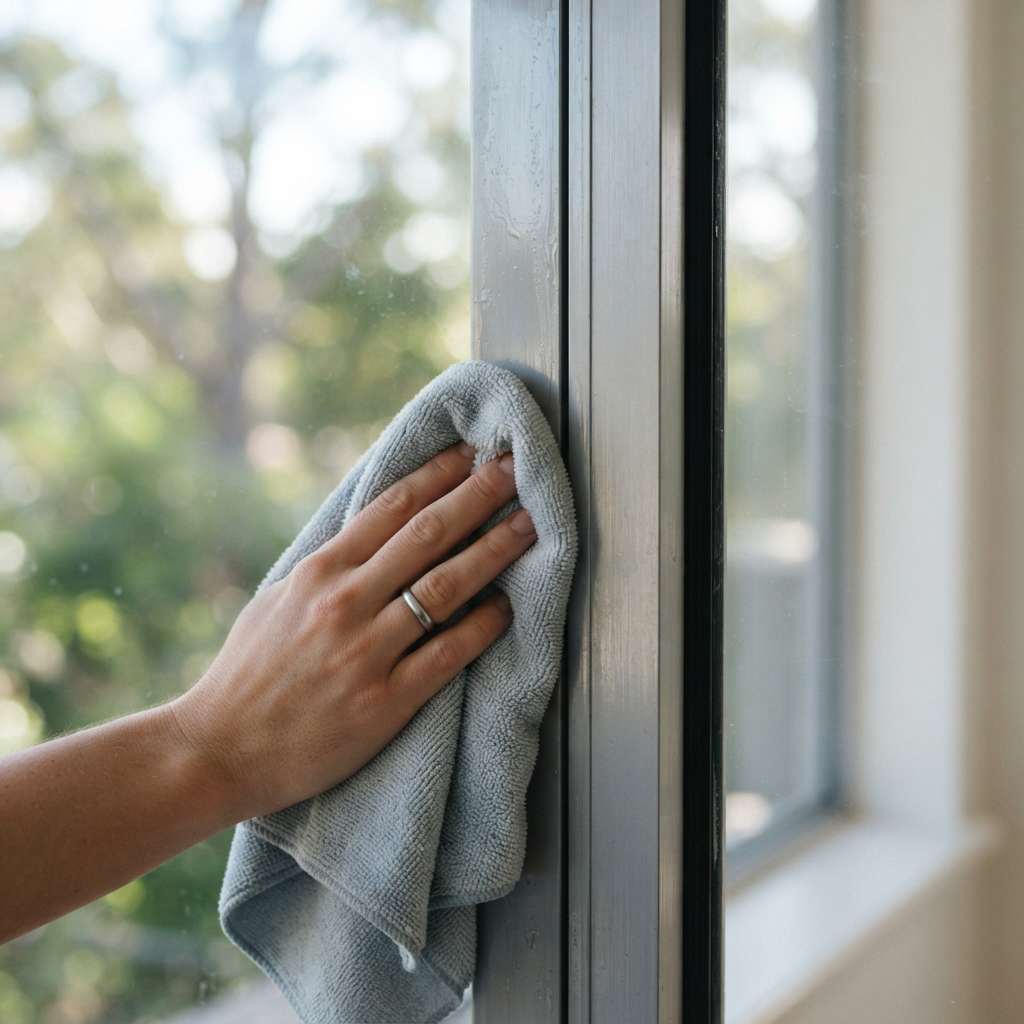
Cleaning frequency isn't one number — it depends on what the window is exposed to.
| Environment | Recommended Cleaning Frequency | Why |
|---|---|---|
| Standard inland home, low pollution | Every 3–4 months | Dust and airborne grime accumulate slowly; a quarterly wipe-down keeps the finish looking new |
| Urban, high-traffic or high-pollution area | Monthly (frames); every few days for glass in heavy smog periods | Particulate buildup dulls the finish faster and can be mildly abrasive if left to accumulate |
| Coastal (within a few km of the sea) | Monthly, with attention to hardware and exposed edges | Salt-laden air accelerates degradation on hardware and unprotected edges faster than on the coated body |
The method matters more than the frequency. A soft cloth or sponge with warm water and a mild, pH-neutral detergent is sufficient for both frame and glass — rinse with clean water afterward to remove detergent residue rather than letting it dry on the surface. What to actively avoid: abrasive pads, scouring powders, steel wool, and specialist metal polishes meant for copper, brass, or raw aluminium — these are formulated for different metals and can scratch or strip a powder-coated or anodized finish that's doing real protective work, not just a cosmetic one.
Acidic or highly alkaline cleaning products (strong bathroom or industrial cleaners, in particular) can also etch or dull a coated finish over repeated use and should stay off the frame entirely.
Finish Care: Powder Coat, Anodized, and PVDF Aren't the Same
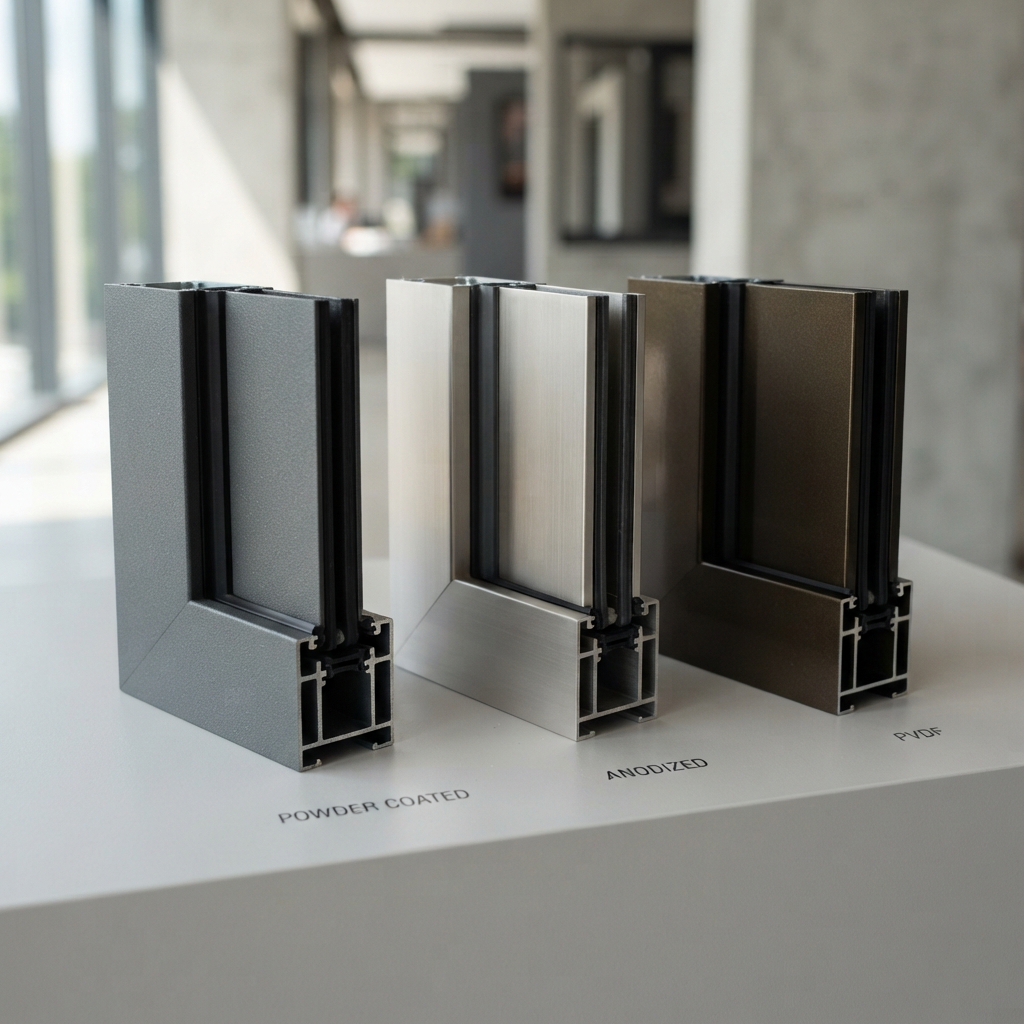
The surface finish is doing more than deciding the colour — it's the layer actually standing between the aluminium substrate and the weather, and different finish types age and need care differently.
Powder coating is the most common finish on Indian aluminium windows. It's a baked-on polyester or polyurethane coating that resists UV fading well and comes in a wide colour range, but it can scratch or chip more readily than anodizing if struck or abraded, and a chip that exposes bare aluminium underneath should be touched up rather than left, since that's the one point where the oxide-layer protection isn't yet established.
Anodizing is an electrochemical process that thickens aluminium's own natural oxide layer rather than adding a separate coating on top — which is why it tends to resist scratching and wear better than powder coat, at the cost of a narrower colour and finish range. India's own standard for this, IS 1868, grades anodic coatings by thickness: AC-10 and below suit light or indoor use, while AC-15 and AC-25 are the grades specified for outdoor architectural work, with AC-25 (20 microns minimum) intended for installations where essentially no visible deterioration is tolerated over the long term. A supplier quoting "anodized" without naming the coating grade is skipping the part of the spec that actually determines how the finish will hold up.
PVDF (fluoropolymer) coatings sit at the premium end for colour retention and weathering resistance, and are the reason architectural finish standards distinguish them from standard powder coat — internationally, benchmarks like AAMA 2604 (mid-tier polyester powder coat, roughly a 10–20 year performance expectation) and AAMA 2605 (high-performance fluoropolymer, roughly 20–30 years) exist precisely so a finish claim can be checked against a number rather than taken on faith.
Whichever finish is on your window, the maintenance is the same: the gentle-cleaning routine above, no abrasives, and prompt touch-up of any chip or scratch that exposes bare metal — waiting on that is how a small cosmetic issue turns into a corrosion starting point.
Hardware: Hinges, Locks, and Rollers
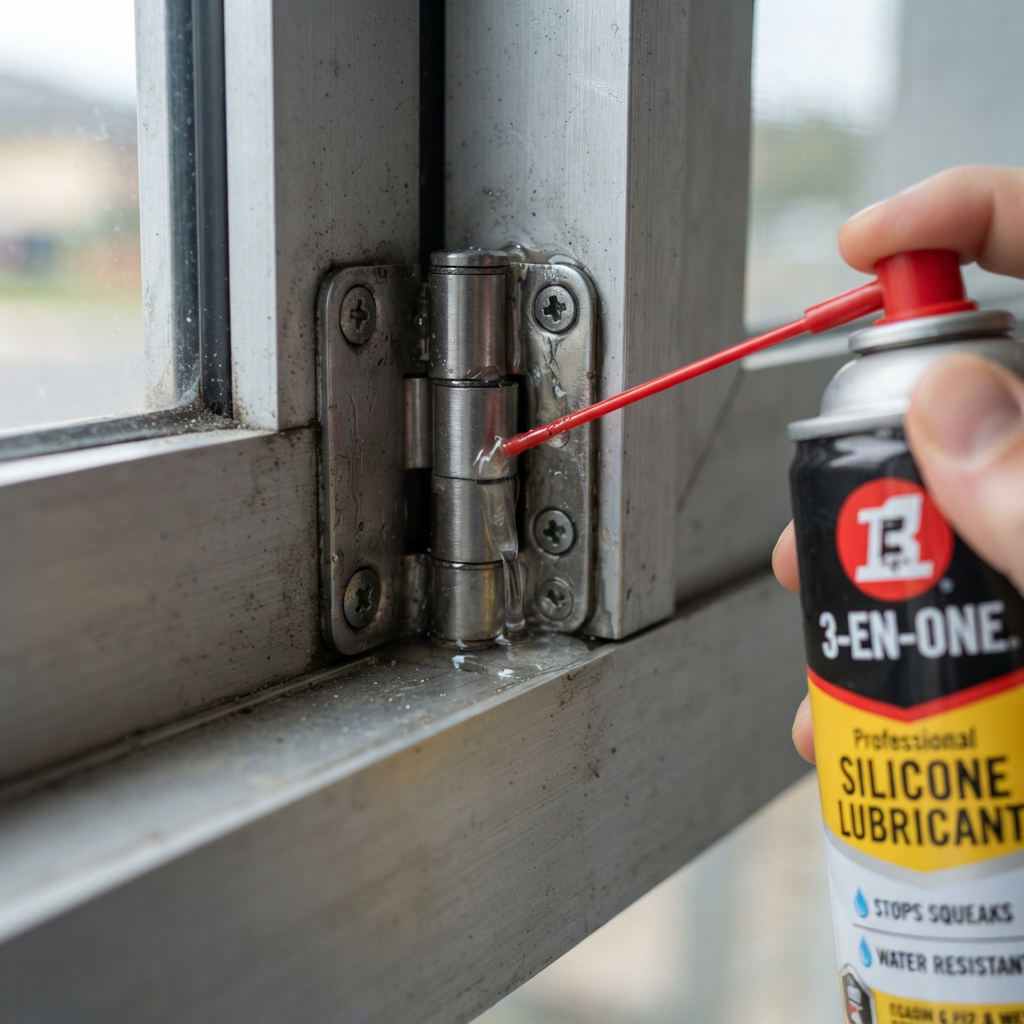
Hinges, multi-point locking mechanisms, and (on sliding systems) rollers are the moving parts, and moving parts need lubrication — this is the one item on the list that has nothing to do with the aluminium frame itself and everything to do with mechanical wear.
The general guidance is to lubricate twice a year with a silicone-based spray lubricant, applied sparingly and with excess wiped away rather than left to attract dust. Oil-based lubricants are the one thing to actively avoid here: they work in the short term but attract airborne dust and grit over time, and that gritty buildup inside a lock cylinder or hinge pivot does more long-term harm than the lubrication was meant to prevent. One exception worth knowing: many sliding and folding door systems use self-lubricating roller wheels by design, which shouldn't be manually oiled or greased at all — check your system's specification before lubricating rollers, since doing it the wrong way can attract the same dust problem.
Between lubrication cycles, it's worth simply operating each window and door a few times a month and noticing whether anything drags, sticks, or needs more force than it used to — that's usually the earliest, cheapest-to-fix sign that hardware needs attention, well before anything actually fails.
Gaskets and Seals: The Part That Actually Wears Out
If any single component on an aluminium window has a real, finite service life, it's the rubber gasket sealing the glass to the frame and the frame to the wall. EPDM (ethylene propylene diene monomer) rubber is the standard material for this because it resists UV, ozone, and temperature swings substantially better than generic rubber compounds — under normal conditions, EPDM gaskets are commonly rated for service lives in the range of 15 to 20-plus years, though direct, sustained UV and extreme heat exposure can shorten that.
The practical maintenance step is a simple visual check, ideally once a year: look for cracking, hardening, brittleness, shrinkage, or gaps where the gasket has pulled away from the frame or glass. None of these show up overnight — they're gradual, which is exactly why an annual look catches the problem while it's still a cheap gasket replacement rather than a leak, a draft, or the condensation-between-panes problem that actually requires reglazing.
This is worth taking seriously because a failed gasket doesn't just look bad — it's a direct energy and water-tightness issue. Industry estimates put the energy loss from degraded window seals at up to roughly 20% of a window's expected thermal performance, on top of being the most common real-world cause of water intrusion that gets blamed on "the window" when the actual fault is a seal nobody checked.
Tracks, Sills, and Drainage: The Step Everyone Skips
Every well-designed aluminium window has a drainage path built into the sill — weep holes and channels that let any water that gets past the outer seal drain back outside rather than pool inside the frame. It's a genuinely good piece of engineering, and it's also completely useless the moment it's blocked by dust, dead insects, or debris, which is precisely what tends to accumulate there unnoticed.
The maintenance here is simple and often skipped entirely: clear tracks and sills of dust and debris during the regular cleaning cycle (a vacuum's narrow attachment works well for sliding tracks), and specifically check that weep holes are open and unobstructed — a quick visual check, or running a small amount of water through them, is enough to confirm they're doing their job. This step matters more, not less, right before the monsoon, since a blocked weep hole discovered in the middle of a heavy rain event is a problem that's already happening rather than one still being prevented. See our monsoon-proofing guide for more on weep holes and drainage.
Monsoon and Coastal Conditions: What Changes
India's climate adds two situations that push the standard maintenance schedule tighter rather than replacing it.
Before the monsoon, it's worth treating the checklist above as a pre-season pass rather than waiting for the usual quarterly interval: inspect gaskets and weatherstripping for the cracking or gaps described above, clear every weep hole and sill channel of the dry-season dust that's accumulated, and confirm hardware operates smoothly so nothing is fighting a stuck lock during a storm. After the monsoon, a follow-up inspection for water staining, unexpected corrosion at any exposed metal (cut edges, screw points, hardware), or gaskets that shifted during heavy weather closes the loop.
Coastal exposure doesn't change what needs maintaining — it changes how often. Salt-laden air is more aggressive on any exposed, unprotected metal (hardware, cut profile edges) than the same conditions are on the coated aluminium body itself, so the cleaning frequency in the table above steps up to monthly, and hardware and any exposed fixings are worth a closer, more frequent look than an inland installation needs.
What Actually Happens If You Skip All of This
Nothing on this list, ignored, causes sudden failure — which is part of why it's easy to skip. What it actually causes is slower and more expensive to fix in hindsight:
- Skipped cleaning: the finish dulls and holds grime faster, and in coastal air, unprotected hardware and cut edges start showing early surface corrosion well before the frame itself is affected.
- Skipped lubrication: hardware starts to stick, requiring more force to operate — the point where a lock or hinge is forced repeatedly is the point where it actually breaks, rather than simply being stiff.
- Skipped gasket checks: a cracked or shrunk gasket leaks water and air quietly for months before anyone notices, and by the time condensation or a draft is obvious, the fix is a professional reglazing or gasket replacement rather than a five-minute visual check would have been.
- Skipped drainage checks: blocked weep holes turn the window's own drainage design against it — water that's supposed to drain out instead pools inside the frame, which is how a properly engineered window still ends up with a water-staining or corrosion problem that looks like a design flaw but is really a maintenance gap.
None of these are dramatic on their own, which is exactly why they're worth doing on a schedule rather than waiting for a visible problem to force the issue.
A Simple Maintenance Calendar
| Task | Standard / Inland | Coastal or High-Pollution |
|---|---|---|
| Wipe down frames and glass | Every 3–4 months | Monthly |
| Clear tracks, sills, and weep holes | Every 3–4 months, plus pre-monsoon | Monthly, plus pre-monsoon |
| Lubricate hinges, locks, rollers (silicone-based) | Twice a year | Twice a year, plus monthly visual check |
| Inspect gaskets and weatherstripping | Once a year | Once a year, plus post-monsoon |
| Touch up finish chips exposing bare metal | As soon as noticed | As soon as noticed |
| Full inspection (hardware, seals, drainage, corrosion) | Annually, pre-monsoon | Twice a year |
Frequently Asked Questions
How often should I clean aluminium windows in India?
Every 3-4 months for a typical inland home is enough — a soft cloth, warm water, and a mild detergent, rinsed off afterward. Coastal homes and high-pollution urban areas should move to monthly cleaning to stay ahead of salt and particulate buildup.
Do aluminium windows need to be repainted like wood?
No — a powder-coated, anodized, or PVDF-finished aluminium frame doesn't need repainting under normal conditions. It needs occasional gentle cleaning and prompt touch-up if the finish is chipped or scratched down to bare metal, which is a much shorter list than wood's recurring sanding-and-sealing cycle.
Can I use any household glass cleaner on aluminium window frames?
Stick to mild, pH-neutral detergent and water on the frame itself, and avoid abrasive cleaners, steel wool, and metal polishes meant for other metals — these can scratch or dull a coated or anodized finish. A standard glass cleaner is generally fine on the glass itself, just keep it off the frame's finish where possible.
How do I know if my window's gaskets need replacing?
Look for visible cracking, hardening, shrinkage, or gaps where the rubber has pulled away from the glass or frame — usually a once-a-year visual check is enough to catch it. EPDM gaskets typically last 15-20-plus years under normal conditions, but a compromised one is worth replacing immediately rather than waiting, since it's the most common real cause of leaks and condensation.
Do aluminium windows need more maintenance near the coast?
The tasks stay the same, but the frequency roughly doubles — monthly cleaning instead of quarterly, and a closer eye on hardware and any exposed cut edges or fixings, since salt-laden air is more aggressive on unprotected metal than on the coated frame body.
Is aluminium really lower maintenance than uPVC or wood?
Aluminium and properly finished uPVC are broadly comparable — both are low maintenance and neither rusts, rots, or warps under normal use. Wood is meaningfully higher maintenance than either: left untreated it's vulnerable to termites, rot, and warping, and staying ahead of that typically means refinishing, sealing, or repainting every couple of years, not the occasional wipe-down and annual check aluminium and uPVC both get away with.
Specified Properly in the First Place
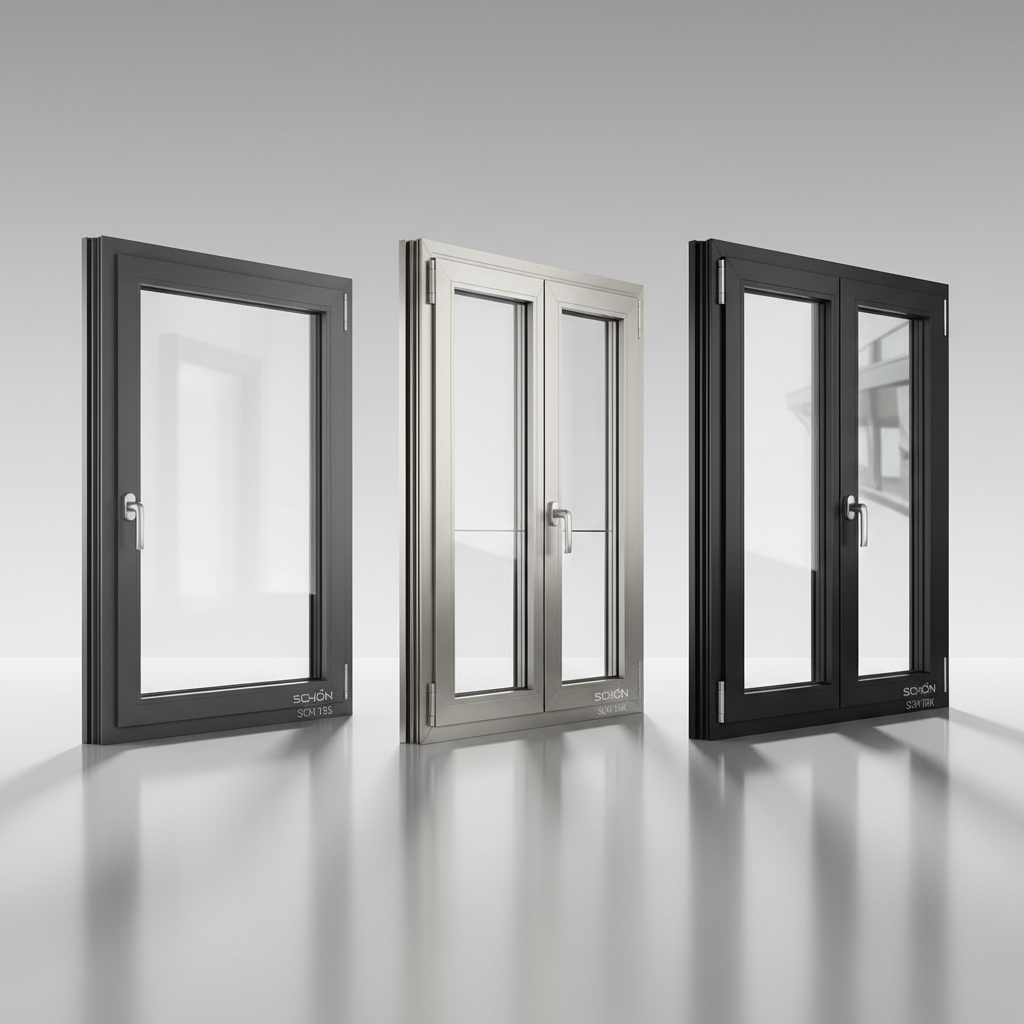
Whatever brand of window you're maintaining, the checklist worth holding any supplier to at the point of purchase is the one this article keeps coming back to: a named alloy grade rather than "aluminium" as a generic claim, a finish specified by type and grade (an anodizing thickness grade, or a named coating standard) rather than just a colour swatch, gaskets specified as EPDM rather than unlabelled "rubber," and a warranty structure that separates the profile, the finish, and the hardware — because each of those ages differently and deserves its own answer, not one vague number covering all three.
SCHON's systems are built to that standard: profiles are extruded from 6063 T5/T6-grade aluminium alloy, sealed with EPDM gaskets, and available in powder coating, anodizing, PVDF, and wood-effect sublimation finishes depending on the collection. The warranty structure reflects the same separation this article recommends checking for — a 25-year warranty on the profile against manufacturing defects, 20 years on the powder-coat/surface finish against discoloration, and a 5-year operational warranty on hardware — each tracked on its own terms rather than bundled into a single line (see our pricing guide for how warranty structure affects cost). None of that removes the basic upkeep this guide describes; it just means the parts you're maintaining were specified properly in the first place, which is most of what determines how well any window ages.
View SCH-135 Infinity 135Disclaimer: This article is for general informational purposes. Maintenance intervals, gasket service-life figures, and coating standards cited are indicative, drawn from published manufacturer and industry guidance as of 2026, and actual requirements vary by product, local climate, and installation quality. Always confirm the recommended maintenance schedule and finish specification with your supplier or fabricator.
