
Key Takeaways
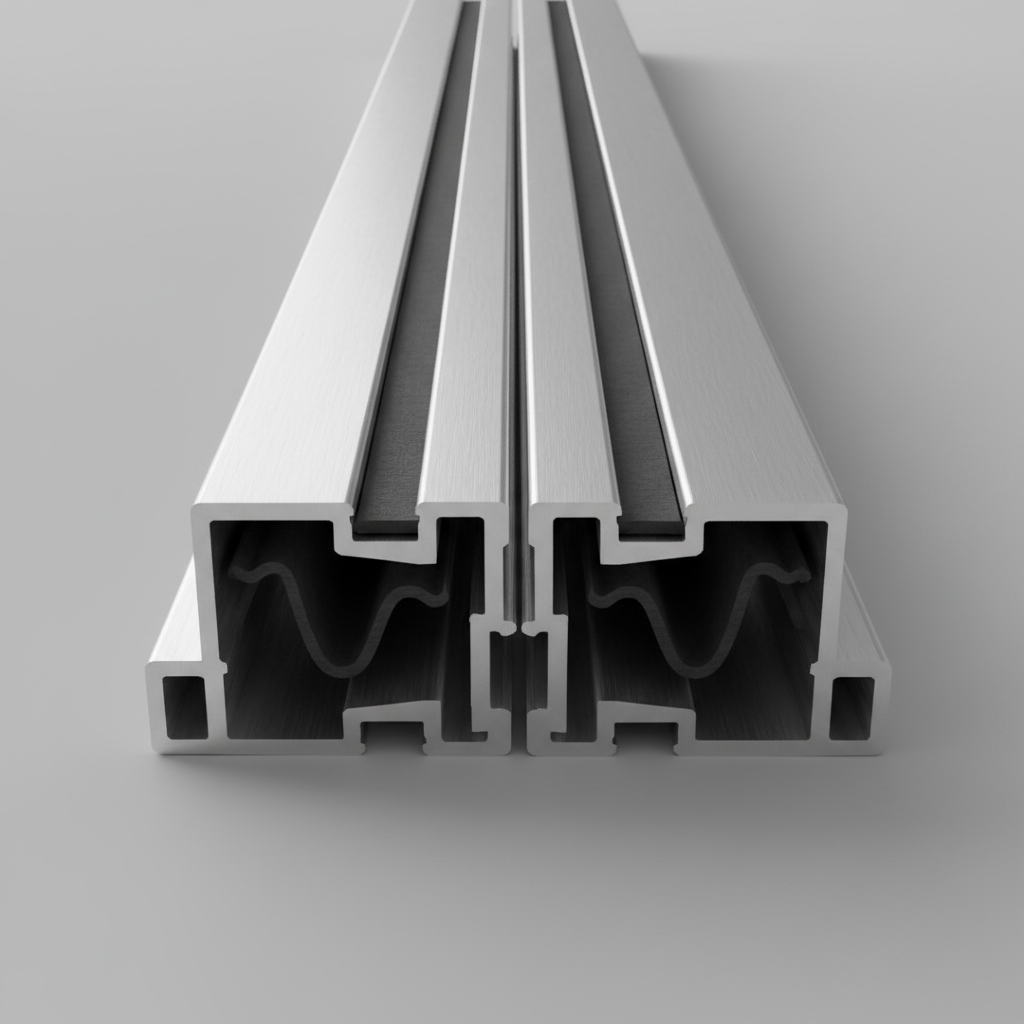
- A thermal break is a polyamide strip that separates the inner and outer aluminium profiles, slowing heat transfer in both directions.
- In air-conditioned Indian homes, thermal breaks reduce heat entering from hot exteriors and reduce cooling losses — not just a cold-climate product.
- Frame conduction is often less significant than solar heat entering through glazing; SHGC, shading, and orientation matter too.
- Standard aluminium frames: Uf ≈ 5.6–7.0 W/m²K. Basic thermal-break: ≈ 2.0–2.8 W/m²K. Deep multi-chamber: ≈ 1.3–1.6 W/m²K.
- India's Eco-Niwas Samhita does not mandate thermal breaks by name — it uses RETV, capped at 15 W/m² for hot and temperate zones.
- Thermal breaks cannot be retrofitted; they must be specified when purchasing the window system.
Ask most people whether they need thermal break windows and the answer comes back quickly: "We're in India — that's for cold countries." It's a reasonable first instinct. Thermal breaks are routinely marketed as a solution to winter heat loss, and India's winters are mild in most of the country. But the physics of a thermal break works in both directions, and the question of whether you need one in India is more nuanced than a single climate assumption.
This article explains what a thermal break actually does, how it interacts with India's five climate zones, what the Eco-Niwas Samhita actually requires, and how to decide whether the cost premium is justified for your specific project.
What Is a Thermal Break?
A thermal break is a strip of low-conductivity material — typically a glass-fibre reinforced polyamide — inserted between the inner and outer sections of an aluminium window or door profile. Aluminium conducts heat very efficiently (thermal conductivity ≈ 160 W/mK). The polyamide strip has a thermal conductivity roughly 500 times lower, so it acts as a barrier that slows heat transfer through the frame cross-section.
The break works in both directions. In winter, it slows heat escaping from a warm interior through the frame to a cold exterior. In summer — or in an air-conditioned room — it slows heat entering from a hot exterior into a cool interior. It also keeps the interior face of the frame warmer in air-conditioned rooms, which reduces the risk of condensation forming on the frame surface during humid weather.
A narrow thermal break provides less insulation than a deeper one. Multi-chamber profile designs, which add internal air pockets alongside the polyamide strip, can improve performance further. The width and construction of the break matters — a vague claim of "thermally broken" without a stated Uf value tells you very little.
Frame U-Values: What the Numbers Mean
U-value (W/m²K) measures how much heat passes through a material per square metre per degree of temperature difference. Lower is better — less heat transfer in either direction.
| Frame Type | Typical Uf (W/m²K) | Notes |
|---|---|---|
| Standard aluminium (no thermal break) | 5.6 – 7.0 | Basic profile, minimal hardware |
| Entry thermal-break system | 2.0 – 2.8 | Thermal break with improved sealing and hardware |
| Deep multi-chamber thermal-break | 1.3 – 1.6 | Deeper break, DGU compatible, branded system construction |
Important: These are frame-only Uf values, not whole-window Uw values. Glass, spacer, and overall tested window design also affect whole-window performance. Always ask suppliers whether a quoted U-value is frame-only or whole-window, and which testing standard was used.
U-Value vs SHGC: Which Matters More in India?
U-value and Solar Heat Gain Coefficient (SHGC) are separate performance metrics that are often confused. U-value measures conductive heat transfer through the frame and glass regardless of direction. SHGC measures how much solar radiation passes through the glazing and enters the room as heat — it is a glazing metric, not a frame metric.
In hot and composite Indian climates, SHGC on sun-facing elevations is often the bigger lever for cooling load than frame U-value alone. A thermal-break frame paired with high-SHGC clear glass and no external shading can still produce excessive indoor heat gain. Hot-climate glazing guidance generally targets an SHGC of approximately 0.25–0.40 on exposed elevations, preferably with external shading.
This doesn't mean frame U-value is irrelevant — it means the two must be assessed together. A well-specified thermal-break frame with low-SHGC glass and appropriate shading is the complete package.
India's Five Climate Zones: Where Thermal Breaks Matter
| Climate Zone | Example Cities | Thermal Break Value |
|---|---|---|
| Hot-dry | Jodhpur, Ahmedabad, Nagpur | Moderate — shading may have greater impact than frame spec alone, but large or west-facing glazing strengthens the case |
| Warm-humid | Chennai, Kochi, coastal Mumbai | High — sustained AC use and humidity make thermal breaks valuable for cooling load and condensation risk |
| Composite | Delhi, Kanpur, Bhopal | High — benefits both hot-summer heat gain and cold-winter heat loss; particularly strong case |
| Temperate | Bengaluru, Pune | Lower — moderate temperatures generally reduce the pressure for thermal-break performance |
| Cold | Shimla, Srinagar, Leh | High — conventional reason of reducing heat loss applies directly |
Condensation: The Overlooked Reason
Non-thermally-broken aluminium conducts indoor cold to its interior surface in air-conditioned rooms. During humid weather, condensation forms when the frame surface falls below the dew point — causing beading, dripping, or musty smells near the window. This is a common complaint in warm-humid cities like Chennai, Kochi, and coastal Mumbai, and in composite-climate cities like Delhi during the monsoon.
Thermally broken frames keep the interior frame surface warmer and reduce AC-driven condensation risk. This is the same heat-transfer physics that improves U-value performance. Condensation resistance and interior comfort can be more noticeable day-to-day than energy-bill savings — if your current windows sweat during humid weather, that is a direct reason to specify a thermal break on your next project, independent of energy calculations.
What Does India's Building Code Actually Require?
India's Eco-Niwas Samhita (ENS) — the residential companion to the ECBC — does not require thermal-break frames by name. It assesses envelope performance through RETV (Residential Envelope Transmittance Value), which combines wall U-value, window U-value, SHGC, window-to-wall ratio (WWR), shading, and orientation into a single figure.
| Zone Type | ENS Requirement |
|---|---|
| Hot and temperate climate zones | RETV ≤ 15 W/m² |
| Cold climate zones | Overall envelope U-value ≤ 1.8 W/m²K (to limit heat loss) |
RETV compliance is a project-level, whole-envelope calculation rather than a homeowner-level single-frame decision. A project can comply through several different combinations of frame, glass, shading, and orientation — not only via a mandated frame specification. The code also recommends a 20–40% window-to-wall ratio and sets minimum visible light transmittance requirements that become stricter as WWR rises.
Pricing: What Does the Premium Look Like?
The thermal break premium is typically 18–25% over standard, single-glazed, non-thermal-break alternatives. Typical frame-plus-basic-glazing price bands in India (2026):
| Tier | Price Range (per sq ft) | What You Get |
|---|---|---|
| Budget standard aluminium | ₹1,350 – ₹1,700 | Basic profile, no thermal break, minimal hardware |
| Mid-range entry thermal-break | ₹1,700 – ₹3,000 | Thermal break with improved sealing and hardware |
| Premium thermal-break system | ₹3,000 – ₹3,680+ | Deeper thermal break, DGU compatibility, branded system construction |
Any payback depends on local electricity tariffs, AC operating hours, and the proportion of the home that is glazed. Supplier-specific break-even claims are not guarantees. See our 2026 aluminium windows price guide for a full breakdown of system-window vs local fabrication costs.
When Should You Specify a Thermal Break?
The decision depends on a combination of factors rather than a blanket India-wide rule:
Large glazed areas
Large sliding doors or glass facades create more conductive frame area than small punched openings — the case for thermal breaks strengthens.
Sustained AC use
Near-continuous air conditioning strengthens the case. Occasional or seasonal AC use narrows the benefit.
Humid conditions with condensation
Previous frame sweating during humid weather is a direct reason to specify a thermal break, independent of energy savings.
Composite climate locations
Delhi, Kanpur, Bhopal — particularly strong case because they experience both cooling-season heat gain and cold-season heat loss.
West or south-facing glazing
High solar exposure elevations benefit most from the combination of thermal break frame and low-SHGC glass.
High-rise or exposed facades
Greater wind-driven temperature differentials and less natural shading from surrounding buildings increase the value of thermal performance.
Better SHGC glass and external shading may provide more value than a frame U-value upgrade on a shaded or moderately glazed elevation. Thermal-break windows should be assessed as part of a complete package of frame, glass, shading, orientation, and glazing area. See our guide on gasket and drainage detail for related performance considerations.
Supplier Evaluation Checklist
When evaluating thermal-break window suppliers, ask for the following:
Stated Uf (frame U-value) and ideally a whole-window Uw figure — not a vague claim of "energy efficient"
The width and construction of the polyamide thermal break — not merely an assertion that one exists
Whether the quoted U-value is frame-only or whole-window, and which testing standard was used
SHGC and shading guidance for your specific building elevation — not a one-size-fits-all answer
How the design addresses interior condensation on air-conditioning-cooled frames
Tested Uf/Uw values for the specific configuration you are purchasing, not a generic "thermally broken" label
Thermal Break Engineered Into the Profile
SCHON's SCH-135 (Infinity 135) platform uses a polyamide thermal break integrated into a multi-chamber insulated frame geometry. The frame is extruded from 6063 T5/T6-grade aluminium alloy, and EPDM thermal gaskets contribute to sealing performance around the thermal-break frame.
Final certified U-value and SHGC performance depend on the specific glazing and configuration installed. SCHON provides tested Uf/Uw figures for specific configurations rather than relying on a general "thermally broken" label. For comparisons of aluminium vs uPVC vs wood, see our full material comparison guide.
View SCH-135 Infinity 135Disclaimer: This article is for general informational purposes. U-value, SHGC, RETV, and pricing figures cited are indicative, based on published technical sources and industry pricing data as of 2026. Actual performance depends on the specific frame, glazing, and installation. Tested Uf/Uw values, SHGC, and RETV compliance should be confirmed with the supplier or architect before purchasing, especially for large-glazing or high-rise projects.
Frequently Asked Questions
Do I need thermal break windows if I live in a hot climate like Chennai or Ahmedabad?
Not automatically, but the case is usually stronger than people assume — sustained air conditioning in a warm-humid or hot-dry climate means the frame is conducting heat inward and cooling outward for most of the year, and thermally broken frames also reduce AC-driven condensation on the interior frame surface, a common complaint in humid cities regardless of winter conditions.
Is a thermal break only about reducing my electricity bill?
No — reduced cooling load is one benefit, but condensation resistance and interior comfort near the window (a cooler frame doesn't radiate as much heat into the room) are separate, often more noticeable benefits day to day.
What's the difference between U-value and SHGC, and which matters more in India?
U-value measures how much heat conducts through the frame or glass regardless of direction; SHGC measures how much solar heat the glass specifically lets through. In hot and composite Indian climates, SHGC on sun-facing glazing is often the bigger lever for cooling load — a good thermal break frame paired with high-SHGC clear glass and no shading will still run hot.
Does India's building code require thermal break windows?
Not by name. The Eco-Niwas Samhita regulates envelope performance through RETV, a combined figure covering wall and window U-values, WWR, SHGC, shading, and orientation — so a project can comply through several different combinations of frame, glass, and shading choices, not only via a mandated frame spec.
How much more do thermal break windows cost than standard aluminium?
Roughly 18–25% more at the point of purchase, based on typical system-window market pricing, though exact figures depend heavily on the specific profile, glazing, and hardware tier chosen. Premium branded systems with deeper thermal breaks and DGU compatibility sit at a higher price band than entry-level thermal break options.
Can I retrofit a thermal break into my existing aluminium windows?
No — the thermal break is integral to how the profile is extruded and assembled; it can't be added to an already-fabricated non-thermal-break frame. It has to be specified at the point of purchasing the window system, not added afterward.
